Pneumatic control Details

Pneumatic Actuator Components

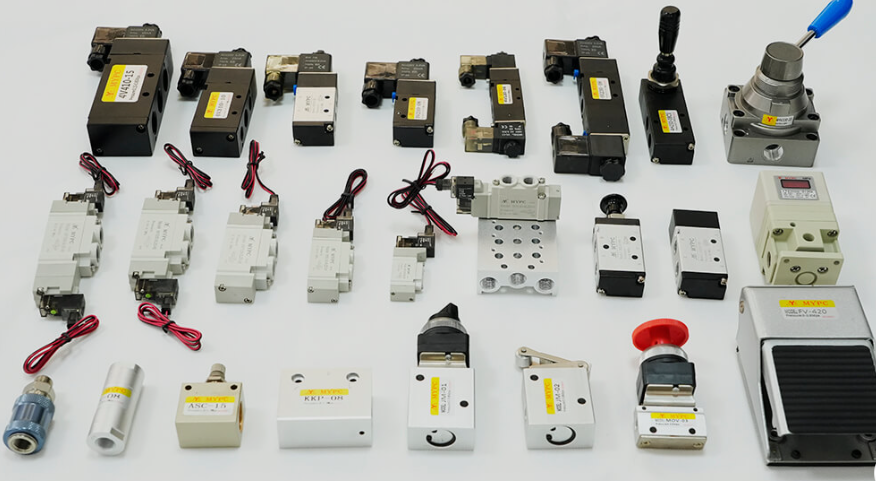
Pneumatic control components use pressurized air to power, direct, and automate industrial machinery. They are organized into generation, preparation, control, and actuation stages, utilizing hardware like air compressors, FRL units, directional control valves, and pneumatic cylinders to generate precise mechanical motion. 
  • Diaphragm or Piston: Flexible membrane or solid cylinder block that moves in response to air pressure changes.
  • Actuator Spring: Provides the counteracting force and acts as a fail-safe to return the valve to its default position.
  • Actuator Stem: Links the pneumatic driver directly to the internal valve shaft.
  • Spring Adjuster: Regulates spring compression to fine-tune operational pressure ranges. 

Highest Expectations

We sincerely hope to use penumatic control to solve customers customized processes. Pneumatic controls is essentials in every aspects in terms of the machines stability and sequences in operations,

What can we support with?

  • Dedication to client satisfaction

  • Dedication to client satisfaction

  • Dedication to client satisfaction

  • Dedication to client satisfaction

  • Dedication to client satisfaction

  • Dedication to client satisfaction

Reporting and Cost Control

An air-operated valve, also known as a pneumatic valve, is a type of power-operated pipe valve that uses air pressure to perform a function similar to a solenoid. As air pressure is increased, the compressed air starts to push against the piston or diaphragm walls which causes the valve to actuate.
 
Key parts include the core (plunger), core spring, core tube, fixed core, coil, diaphragm, stem, disc, seat, seals, bonnet, body, bleed orifice, and pilot channel. Each component contributes to reliable, precise, and leak-free valve operation in demanding pneumatic applications.
 

The main components of a control valve consist of the valve bodyvalve trim, and actuator. These key parts work together to regulate the flow, pressure, or temperature of liquids and gases in a system.

The four most common types of control valves used in industrial systems are globe valves, ball valves, butterfly valves, and diaphragm valves. These devices regulate fluid flow, pressure, and temperature by changing the size of the flow passageway in response to an automated signal.

When using these systems, there is an unlimited supply of air that is used to create compressed air. The use of compressed air is not encumbered by distance. It can be easily transported through pipes. Highly reliable and durable- pneumatic components are known to be exceptionally durable.
 

We Build Building and Great Homes.

We successfully cope with tasks of varying complexity, provide long-term guarantees and regularly master new technologies.

Get in touch

(+380) 50 318 47 07

65 Allerton Street 901 N Pitt Str, Suite 170, VA 22314, USA